
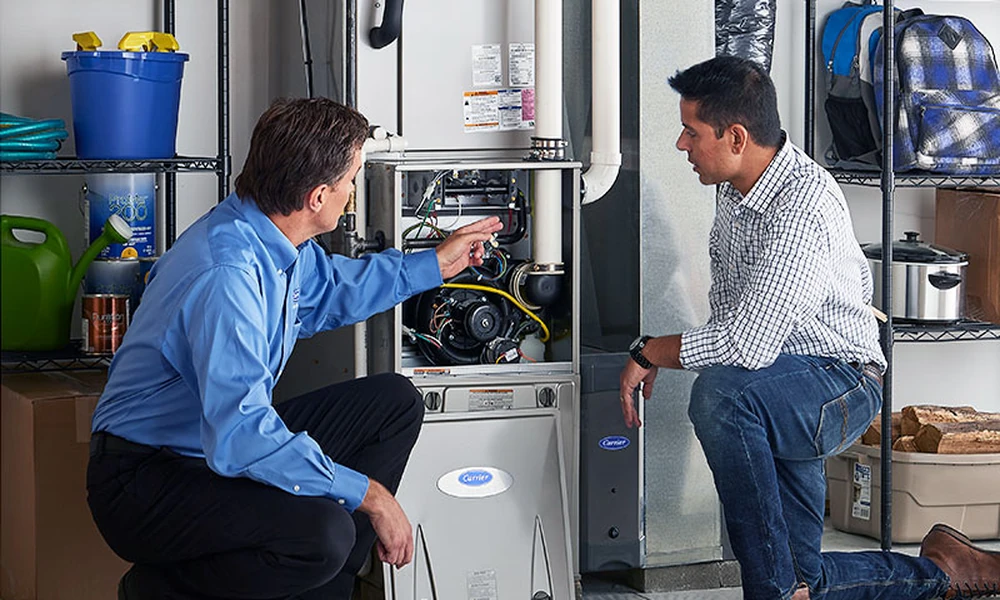
Replacing a furnace is a substantial household expense, and the equipment price rarely tells the whole story. Installation, efficiency, existing ductwork and necessary alterations all affect the final bill. Understanding these differences helps you set a realistic budget and compare quotations without overlooking essential work.
How Much Does Furnace Replacement Cost in 2026?
For initial budgeting, Angi’s 2026 national installation data gives a typical range of approximately 6,900 across furnace projects. Carrier’s gas-furnace guide gives a broader installed range of 12,000. These figures cover different project mixes, so they should not be treated as directly interchangeable or as verified Chambersburg averages. All prices here are in US dollars.
When comparing heating installation and replacement in Chambersburg, PA, request a home assessment before relying on any advertised starting price. A straightforward replacement using suitable existing connections will generally involve less work than changing fuel type or rebuilding the ventilation arrangement.
What Makes One Installation More Expensive?
Furnace Capacity and Efficiency
Your contractor should calculate the home’s heating load rather than simply match the old furnace. Insulation, windows and air leakage affect the capacity required. Oversized equipment can cost more and cycle too frequently, so choosing a bigger furnace is not automatically an improvement.
Quotations for heating installation and replacement in Chambersburg, PA should identify the proposed model, heating capacity and annual fuel utilisation efficiency, or AFUE. This rating describes how efficiently the furnace converts fuel into useful heat over a typical year.
Higher-efficiency equipment often costs more initially. Two-stage and modulating models can also carry a premium for adjusting heat output more closely to demand. Ask for an operating-cost comparison based on your actual fuel bills rather than a blanket savings promise.
Installation Work and Existing Infrastructure
Difficult access, damaged ducts and changes to electrical or fuel connections can increase labour and material costs. Moving to a condensing gas furnace may also require different venting and condensate drainage.
For example, replacing a furnace in an accessible basement with compatible connections differs from upgrading equipment in a cramped space that needs substantial alterations. The appliance price alone cannot capture that difference.
What Should a Written Quotation Include?
Request two or three itemised quotations covering the same scope. A lower total may exclude work another contractor has already included.
Check for:
- The furnace model, capacity and efficiency rating.
- Installation labour, materials and old-equipment disposal.
- Any ductwork, venting, drainage or electrical alterations.
- Applicable permits, inspections and final system testing.
- Parts and labour warranties, including registration requirements.
Also ask how unforeseen work will be approved and priced. Confirm the expected period without heating, particularly if installation is planned during cold weather.
Check Incentives Before Reducing Your Budget
Do not assume older articles advertising federal furnace tax credits still apply. The IRS states that the Energy Efficient Home Improvement Credit covers qualifying improvements made through 31 December 2025; it does not cover a furnace installed in 2026.
Utility or manufacturer offers may differ. Verify availability, eligible models and application conditions before deducting any incentive from your expected cost. If financing is offered, compare the total repayable amount as well as the monthly payment.
Frequently Asked Questions
Is Repairing an Older Furnace Still Worthwhile?
Sometimes. Compare the repair quotation, warranty coverage, breakdown history and overall condition with a fully installed replacement. Age alone does not determine the best choice; ask the technician to explain the diagnosis and available options.
Will a New Furnace Automatically Lower Heating Bills?
Not necessarily. Efficiency matters, but fuel prices, weather, thermostat settings and heat loss also influence spending. Correct sizing and installation are essential, and savings should be estimated rather than guaranteed.
Conclusion
Furnace replacement costs vary because homes and installation requirements differ. Use national ranges to begin planning, then obtain detailed local quotations. Prioritise suitable sizing, complete installation work and clear warranty terms when deciding which proposal offers the best long-term value.