
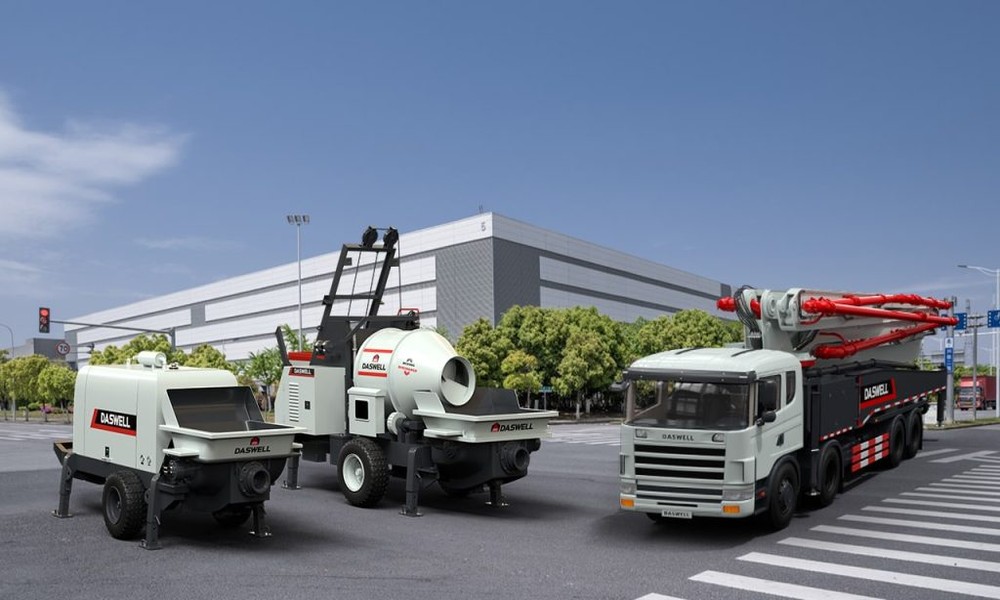
In the demanding environments of mining and tunnel construction, efficiency, precision, and reliability are critical. From underground support systems to large-scale infrastructure projects, the ability to transport and place cement-based materials quickly and accurately can determine project success. One of the most impactful innovations in this space is the hydraulic cement pump.
Hydraulic cement pumps have transformed how grout, shotcrete, and concrete are delivered in challenging conditions. By combining power, control, and adaptability, these systems enable faster operations, improved safety, and higher-quality results.
What Is a Hydraulic Cement Pump?
A hydraulic cement pump is a machine that uses hydraulic pressure to transport cementitious materials through pipelines to the desired location. Unlike manual or gravity-based methods, hydraulic pumps provide consistent pressure and flow, allowing materials to be delivered over long distances and into hard-to-reach areas.
These pumps are commonly used for grout injection, shotcrete application, tunnel lining, and underground stabilization.
The Role of Hydraulic Cement Pumps in Mining and Tunneling
Hydraulic cement pumps play a vital role in several key operations.
In mining, they are used for backfilling, ground stabilization, and sealing voids to ensure structural safety.
In tunnel construction, they support lining applications, crack filling, and reinforcement of surrounding soil or rock.
They also enable precise placement of materials in confined or hazardous environments where manual methods are not practical.
Their ability to deliver materials efficiently and accurately makes them indispensable in modern projects.
Key Design Features
Hydraulic cement pumps are engineered to handle demanding conditions and abrasive materials.
Hydraulic System
The core of the pump, the hydraulic system provides the القوة required to move materials through pipelines. It ensures consistent pressure and smooth operation even under heavy loads.
Pumping Mechanism
Most systems use piston or plunger mechanisms to push material through the pipeline. These designs are highly efficient and capable of handling high-density mixes.
Wear-Resistant Components
Given the abrasive nature of cement and aggregates, pumps are built with durable materials to reduce wear and extend service life.
Control Systems
Modern pumps include advanced controls that allow operators to adjust flow rate, pressure, and output based on project requirements.
Mobility and Compact Design
Many hydraulic pumps are designed to be portable, making them suitable for confined spaces such as tunnels and underground mines.
Benefits of Hydraulic Cement Pumps
Improved Efficiency
Hydraulic pumps significantly reduce the time required to transport and place materials, accelerating project timelines.
Enhanced Precision
Controlled flow and pressure allow for accurate placement, reducing material waste and ensuring consistent coverage.
Increased Safety
By minimizing manual handling and allowing remote operation, these pumps reduce worker exposure to hazardous conditions.
Cost Savings
Efficient material usage, reduced labor requirements, and faster completion times contribute to lower overall project costs.
Versatility
Hydraulic cement pumps can handle a wide range of materials, including grout, shotcrete, and concrete, making them suitable for diverse applications.
Common Applications
Ground stabilization and soil improvement
Tunnel lining and shotcrete application
Mine backfilling and void filling
Crack injection and structural repair
Dam construction and infrastructure projects
Their adaptability makes them a valuable asset across multiple industries.
Best Practices for Optimal Performance
Use properly designed mixes that are compatible with pumping equipment.
Regularly inspect and maintain pump components to prevent breakdowns.
Monitor pressure and flow rates to ensure consistent operation.
Train operators on safe and efficient usage.
Plan pipeline layouts to minimize resistance and improve efficiency.
Common Challenges and Solutions
Blockages can occur due to improper mix design or inconsistent flow. Ensuring proper material consistency can prevent this issue.
Wear and tear is common due to abrasive materials. Using high-quality components and regular maintenance can extend equipment life.
Pressure fluctuations may affect performance. Proper calibration and monitoring help maintain stability.
Conclusion
Hydraulic cement pumps have revolutionized mining and tunnel construction by providing a powerful, efficient, and reliable method for material placement. Their advanced design and versatility make them essential for modern projects that demand precision and safety.
By understanding their role, design, and benefits, construction and mining professionals can optimize operations, reduce costs, and achieve superior project outcomes. As technology continues to evolve, hydraulic cement pumps will remain a cornerstone of efficient and innovative construction practices.